16.- La red ferroviaria del valle del Río Aller
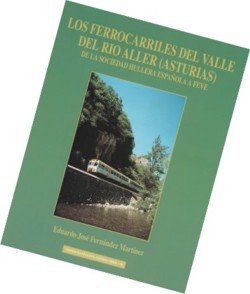 The narrow and isolated valley of the Rio Aller, in the south of the Asturias, but in the northern spurs of the Cantabrian Mountain chain, possesses geologically an enormous quantity of coal of industrial use, as the municipalities of his surroundings.
The historical and industrial needs do necessarily the beginning of the extractions of the mineral, of a very increasing way, taking pair the need to give exit out of the valley of the whole production of coal for his use in the local industry.
This transport, which initially is realized of precarious form by cars, soon takes place across the railroad, by means of multiple railway companies, lines and systems, which believe a chaotic use of little available space in the valley.
After the first project of railroad of the zone, at the expense of the Mining Society The Highland one, between Ujo and Moreda de Aller, it is the line of the Society Mines of Aller's Coal the one that constitutes the first railroad of the valley. This railroad, after the creation of the SHE, Society Spanish Colliery, changes ownership and is extended, constituting the most extensive network of those who operated in the valley. This network went on later to HUNOSA's hands and finally closed.
The streetcar to Steam of the Industrial Asturian Society between Santullano and Cabañaquinta, Mina Desquite's Railroad to Moreda, the branch of Broad Route between Sovilla and Ujo, and the line between Ujo and Asturian Collanzo del Vasco, now Feve, they are different of the railroads that they managed to develop in the valley.
Besides an extensive description of every railroad, also there are detailed the projects of the continuation of Collanzo's railroad to Felechosa and to Matallana, to join with narrow rail Asturias and León to the margin of the broad route, the projects for the variant of Barns that included in someone of his offers the valley of the Aller, and the current importance of the valley, in which there affects specially the end of the exploitation of the coal, the survival of only one of his railroads, the population decrease and in general the decadence that is suffered after so many years of great industrial activity.
 Buy this book
Characteristics
Date of publication: 2003
Language: Spanish
Nº of pages: 171
Author: Eduardo J. Fernandez Martínez.
Size: 21 X 27 X 1,2 cm.
ISBN: 84-930930-5-X