19.- Los ferrocarriles en los protectorados y colonias españolas en África
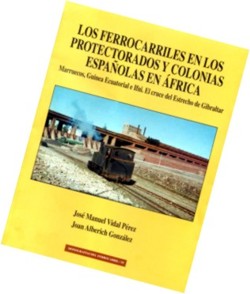 The exotism of the unknown railroads of the former Spanish colonies in the African continent, as well as a certain sentimental link of the authors towards this zone, they ended in the work that, after remaining outlined in a web page, saw finally the light in the shape of book. As the authors explain, the central topic of the book includes a great number of railway nets with many peculiar characteristics. This owed to the conjunction of many factors, since they are the warlike, political and social situation of the narrated territories, a motive power and mobile known enough in Spain, a slightly common architecture inside the set of the Spanish railroads and a strange landscape for the common thing in Spain, between others.
The book is divided into three parts. The first one of them, the most extensive, includes all the nets and railroads of the former Spanish protectorate in Morocco, with special attention to the Spanish Company of the Rif Mines. The chapter examines at detail the railroads of Melilla's environment, which from Ceuta were entering the continent towards the south, the peculiar lines of the Tractocarril, as well as a revision to the current importance of the Moroccan railroad, clearly influenced by the French railroad. This part completes a study of the lines of Melilla's streetcar and Ceuta, and the railroad projects that did not manage to see the light.
The second part approaches a dream, of joining ferroviariamente Spain (And consequently Europe) with the African continent, with the aim to join all the European colonies in this continent with the colonizing countries. Of this form, the explanations happen to the different projects throughout last decades to realize this connection across the strait of Gibraltar, as well as the big bets for the railroad construction transafricanos.
The last part takes charge of the systems of railway transport in other Spanish colonies of the African continent. This way, there appear the railroads of Equatorial Guinea and of the region of Ifni.
 Buy this book
Characteristics
Date of publication: 2004
Language: Spanish
Nº of pages: 288
Authors: José Manuel Vidal Pérez and Joan Alberich González
Size: 22 X 20,5 X 1 cm.
ISBN: 84-930930-9-2